
Homes in Steilacoom, WA carry wiring and panels sized for a much lighter load than what sits on them now, and the electrical contractors in Tacoma who work these houses know that a tripped breaker or a warm outlet is rarely the whole story. A network of local electricians handles everything from a fuse box that has run out of room to professional electrical panel upgrade work that brings a house up to what it is actually running.
When the panel is the problem and not just the symptom, Steilacoom homeowners find that a local electrician who has opened these boxes before moves faster and wastes less of the day.
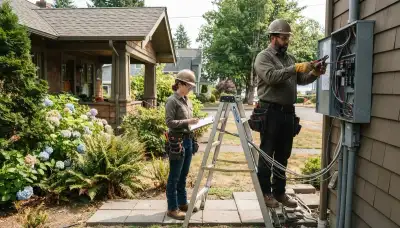
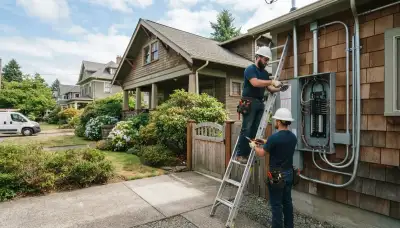
What Local Electricians Know About Steilacoom Homes
Most homes in Steilacoom went up in the forties through the early sixties, wood-frame construction set over a basement or a crawlspace, with panels tucked into a basement utility corner or a garage wall. That history shapes every job before a tool comes out of the bag.
A crawlspace under the house means running a new circuit is straightforward on a good day; a finished basement changes the math entirely. Two kinds of work show up most often here: panels that have no empty slots left and outlets that were never grounded. Electricians serving Dupont, WA electrical services face similar construction in neighboring towns.
If the panel is full or the outlets are two-prong, getting it looked at now keeps a small problem from becoming a costly one.
Work Matched to How Steilacoom Homes Are Built
An off-the-shelf approach fails here because the access changes the job. A panel on a basement wall with a crawlspace below it opens up a circuit run in a morning; the same job in a house with no basement and a finished interior takes a different path and a different plan.
Wood-frame homes over a crawlspace let a wire run move without opening walls. Homes where the basement was finished later often have wiring tucked behind drywall that was never meant to come down, which changes how the work gets staged. Expert generator installation in a house with a detached garage, for example, requires a long outdoor run that ages differently from the house itself.
Four services fit these homes well: quality GFCI circuit work for kitchens and baths that were never protected, specialist outlet repair for two-prong boxes throughout the house, reliable electrical wiring replacement where aluminum runs were left in place, and professional ceiling fan installation in rooms that were never roughed in for one.
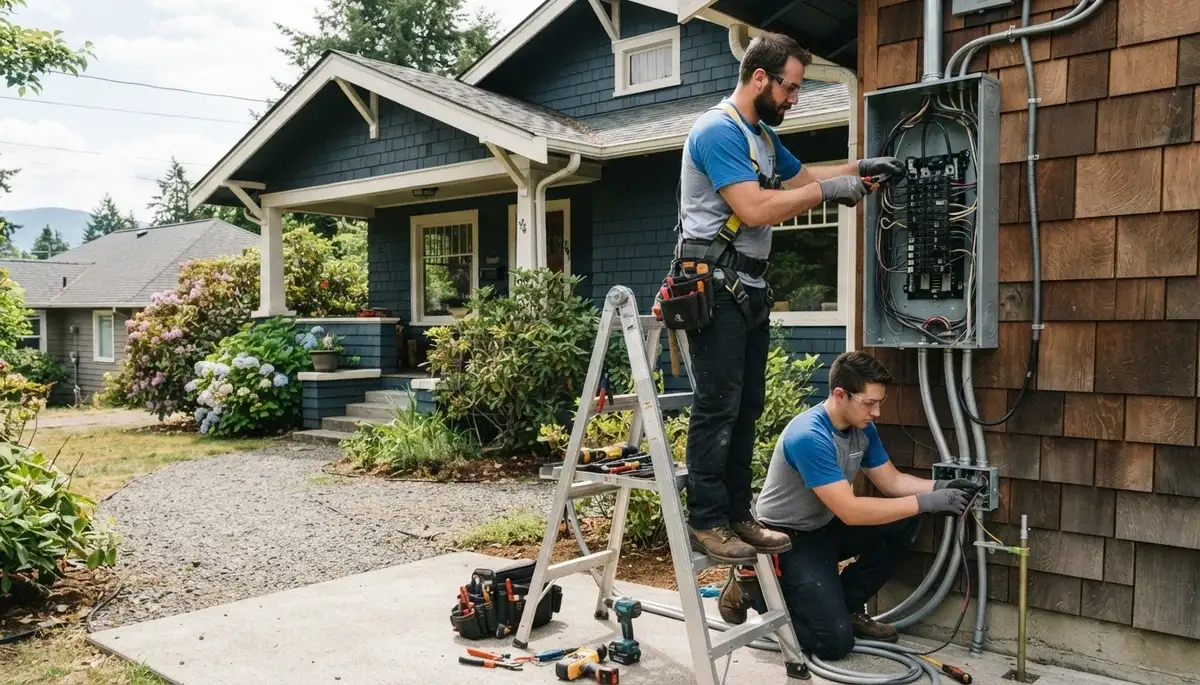
What the Age of Steilacoom Homes Still Decides Today
Most houses here went up in the forties through the early sixties, a span when sixty-amp service was the standard and no one was wiring for a dishwasher, a dryer, and a car charger on the same panel. Three things follow from that: the panels are small, the circuits are few, and the grounding was never part of the original plan.
Panel That Has No Room Left
The homeowner sees a breaker box with every slot filled and a few tandem breakers jammed in to make space. Behind that is a sixty or hundred-amp service that was sized for a house running far less than what sits on it now. Left alone, a full panel means no safe place to add a circuit and a real risk of overloading what is already there.
Local electricians replace the panel with a properly sized box, pulling the old service and setting new breakers that match the actual load. Electricians working in Lakewood, WA see the same panels in houses built the same decade.
Outlets That Were Never Grounded
Two-prong outlets throughout the house are the visible sign. The wiring behind them was run before grounding was required, which means anything plugged in there has no fault path if something goes wrong. Sensitive electronics and appliances with metal housings are at real risk.
Adding grounded outlets or installing the outlets with test and reset buttons where code allows brings those circuits into a condition where they can protect what is plugged into them. The homeowner ends up with outlets that work safely with modern appliances and no longer need adapter plugs.
Circuits That Trip When Two Things Run
The kitchen breaker trips when the microwave and the toaster run at the same time. The bathroom loses power when the hair dryer is on. These homes were built with one or two circuits serving rooms that now need four or five, and the wiring has been carrying more than it was sized for since the day the second appliance arrived.
Running dedicated circuits to the kitchen, bathrooms, and laundry separates the loads and stops the tripping. The homeowner can run the kitchen the way it was meant to be used without watching the breaker box.
Load That Was Added After the House Was Built
A car charger in the garage, a new air conditioning unit, or a pool pump added to the backyard each pulls a load the original service was never sized for. On a hot day when the air conditioning is running and the car is charging, the panel is carrying more than it can handle without tripping or running hot.
Adding capacity means either upgrading the panel or running a dedicated subpanel to the garage or outbuilding where the new load lives. Once that is done, the homeowner can run the car charger, the air conditioning, and the kitchen at the same time without watching the breaker box or worrying about what trips next.
Wiring That Runs Through a Tight Crawlspace
The physical constraint here is a crawlspace that is shallow, wet in spots, and not built for a person to move through comfortably. Pulling a new circuit from the panel to a far room means working in a space where every foot of progress takes longer than it looks from above.
Local electricians plan the route before the work starts, using the crawlspace where it opens up and coming through the floor or wall only where the run demands it. The result is a finished circuit with no torn-up ceilings and no drywall work left for the homeowner to deal with afterward.
Call (253) 358-8585 to arrange a visit from a local electrician who will look at what the house actually has, not what a house of this age is supposed to have. No pressure, just a straight read on what needs attention.
On Call Electrical does the work right the first time so Steilacoom homeowners do not have to call twice.

Full Electrical Services Available Across Steilacoom, WA
The list below covers the range of work available to homeowners here. Find what fits the situation and reach out to talk through the next step.
Urgent Electrical Work for Steilacoom, WA Homes
- Electrical Repair - A breaker that will not reset or an outlet that stopped working needs attention before it gets worse in a house this age.
- Outlet Repair - Two-prong outlets and outlets warm to the touch are common in forties and fifties homes and neither one is safe to leave.
- Switch Repair - A switch that sparks, buzzes, or feels loose has a connection problem behind the plate that should not wait.
- Smoke Detector Installation - Older homes often have detectors that are past their service life or placed where they cannot reach every sleeping area.
- Fire Alarm Installation - A house with original wiring and no interconnected alarm system has a gap that a proper installation closes.
If any of these match what the homeowner is seeing, a call to (253) 358-8585 gets someone out to take a look.
Panel, Service, and Wiring Work for Steilacoom, WA Homes
- Electrical Panel Upgrade - A sixty or hundred-amp panel in a house now running a full kitchen, laundry, and garage load needs more room than it was built with.
- Electrical Panel Installation - Replacing a fuse box with a proper breaker panel is the first step when the house has no empty slots and no safe way to add a circuit.
- Electrical Wiring - Aluminum branch wiring left in place from the late sixties and early seventies needs to be addressed before it causes a connection failure.
- Electrical Service - The service entrance itself ages and can become a bottleneck even when the panel inside has been updated.
- New Construction Wiring - An addition or a finished basement in a house this age needs wiring that matches what the rest of the house is running, not what it was running in 1955.
These are the jobs that change what a house can carry, and getting them right the first time matters more in an older home than anywhere else.
Safety and Protection Work for Steilacoom, WA Homes
- GFCI Circuits - Kitchens and bathrooms in homes built before the seventies were never protected by the outlets with test and reset buttons, and adding them closes a real gap.
- GFC Outlets - Individual outlet replacement in the rooms where water is present is the targeted fix when a full circuit upgrade is not yet in the plan.
- Whole Home Surge Protection - A panel-level surge device protects every circuit in the house from a voltage spike that would otherwise reach every plugged-in appliance.
- Lightning Surge Protection - Homes with older wiring have less tolerance for a surge because the insulation on the wire has aged and the connections are not as tight as they once were.
- Home Electrical Inspections - A house that has never had its wiring looked at since it was built is carrying decades of unknowns that an inspection brings into the open.
A surge or a fault in a house with aging wiring can move fast. Getting protection in place before that happens costs far less than dealing with the damage after, and it gives the homeowner a clear picture of what the house is actually running on.
Lighting, Outdoor, and Added-Load Work for Steilacoom, WA Homes
- Electric Car Charger Installation - A dedicated circuit to the garage handles the load a car charger draws without pulling from circuits that are already full.
- Landscape Lighting - Outdoor runs in a yard this age often have wire that has degraded underground, and a proper installation starts with what is actually there.
- Security Lights - Motion-activated lights on the exterior need a circuit that was never part of the original plan in most homes built here.
- Recessed Lighting Installation - Adding recessed lights to a room with a crawlspace above it is a manageable job; doing it in a house with a finished attic takes a different approach.
- Generator Installation - A standby generator tied to the panel gives the house power when the grid goes down, and sizing it correctly means the circuits that matter most stay on.
These added loads are what homeowners here are asking their houses to carry now, and matching the wiring to the actual demand is what keeps the system running without surprises.