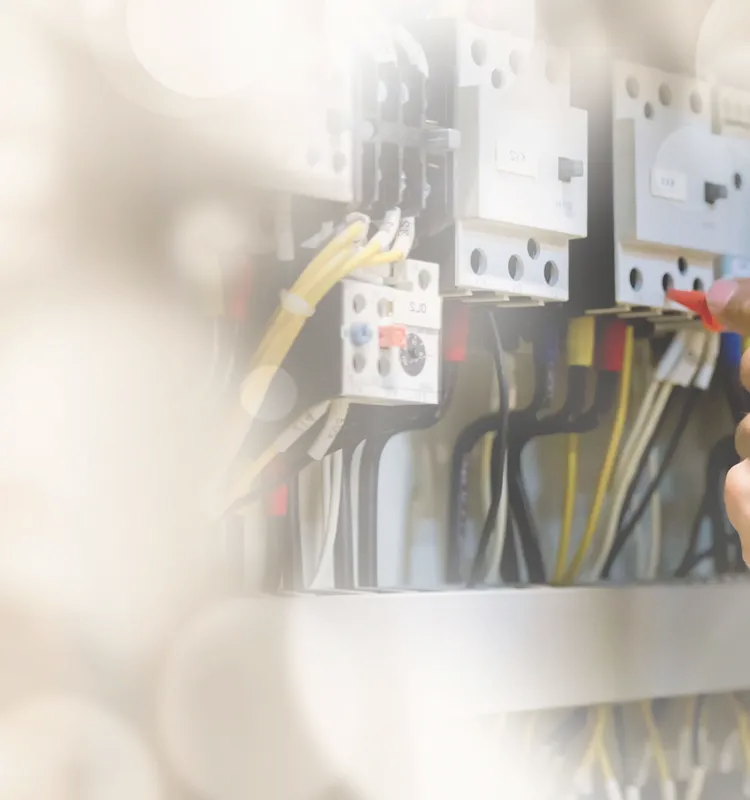
The homes in Lakewood, WA were mostly built in the fifties and sixties, and most of them sit on crawlspaces with panels in utility closets or on interior walls. Electrical contractors in Tacoma who work these houses regularly know what that means: fuse boxes that were never swapped out, two-prong outlets in every room, and professional electrical panel upgrade work that comes up on nearly every job. A network of local electricians handles this every week.
Homeowners here call a local electrician because the specifics of how these houses were built change what every job actually involves, and a stranger to these homes will miss that.
What Local Electricians Know About Lakewood Homes
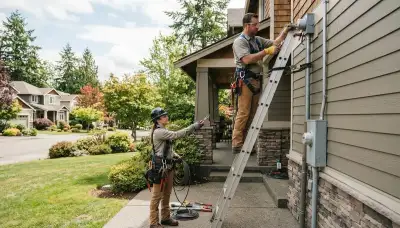
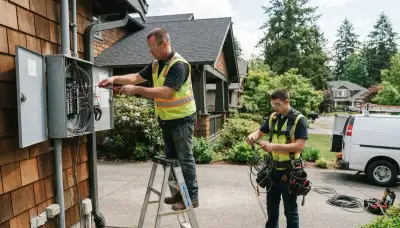
A local electrician who has worked Lakewood homes knows that the crawlspace under most of these houses decides whether a new circuit takes a morning or opens walls. Panels tucked into interior utility closets add another layer to every service call.
Two kinds of work come up constantly: fuse boxes that need to be replaced before a homeowner can add a single new load, and outlets that have never been grounded. Electricians serving University Place, WA see the same pattern in houses from the same years.
If something in the electrical system feels off, getting it looked at now costs far less than waiting for it to fail at the worst possible time.
Electrical Work Matched to How Lakewood Homes Are Built
An off-the-shelf approach fails in houses built this way because the crawlspace access, the panel location, and the original wiring all shape what the job actually takes. Routing a new circuit through a finished wall is a different job than pulling one through an open crawlspace.
Detached homes on wider lots carry long outdoor runs to garages and sheds that aged differently from the main house. Homes with basements converted to living space often have wiring that was added without a permit and needs to be evaluated. Expert ceiling fan installation in a house with a finished ceiling over a crawlspace is a different job than the same work in new construction.
The work available across Lakewood homes covers quality GFCI circuit installation, specialist outlet repair, reliable generator installation, and professional smoke detector installation, each one approached with the construction of these houses in mind.
How the Age of Lakewood Homes Shapes the Work Today
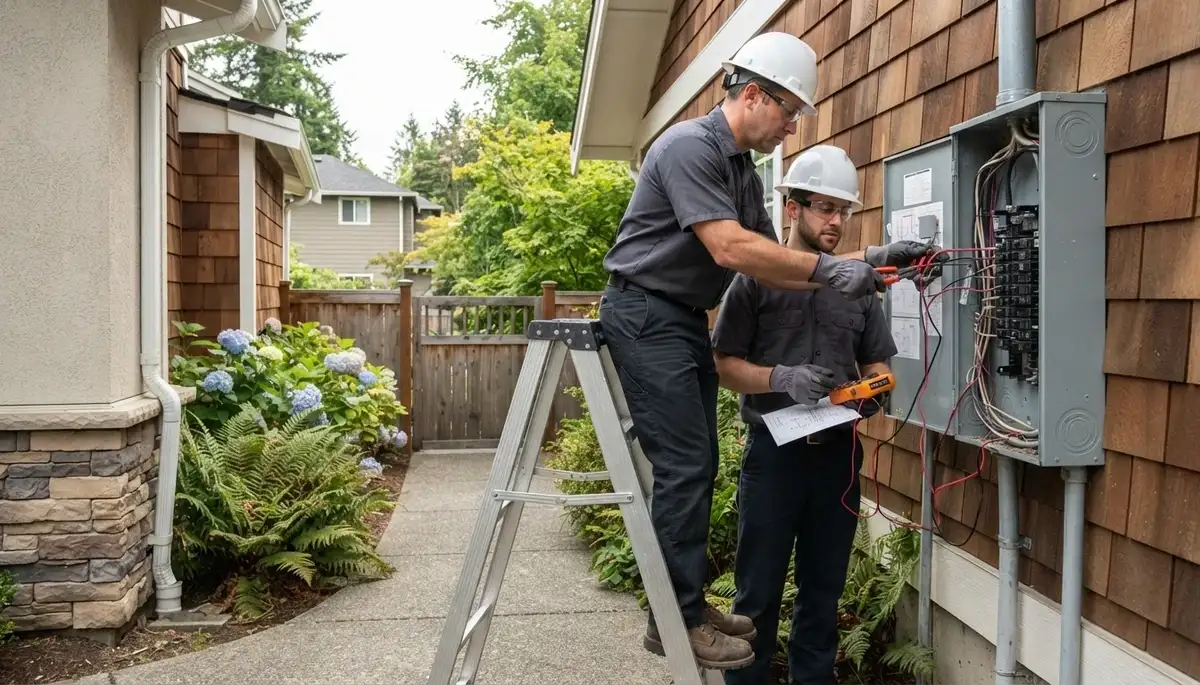
Most houses around here went up in the fifties and sixties, which means they left the builder with sixty-amp service, two-prong ungrounded outlets, and wiring that was sized for a refrigerator, a few lamps, and a furnace. Three things follow from that and still shape every job: the panel is likely full or nearly full, the wiring has no ground path, and the circuit count was never enough for how kitchens and bathrooms are used now.
Breakers That Trip and Won't Reset
A breaker that trips when two appliances run at the same time is not a nuisance - it is a sign that a circuit is carrying more than it was built for. In houses from this era, the kitchen often shares a circuit with the dining room, and the bathroom shares one with a hallway. Left alone, the breaker trips more often and eventually the wiring behind it begins to overheat.
Local electricians add dedicated circuits where the load has outgrown the original count. Homeowners who have had this done find that the tripping stops and the panel has room to grow. The same work is handled for Spanaway, WA residential electricians serving houses from the same period.
Outlets Warm to the Touch
An outlet that feels warm when nothing is plugged in points to a connection that is failing. In houses built in the late sixties and into the early seventies, aluminum wiring was common, and aluminum connections loosen over time in a way that copper ones do not. A loose aluminum connection generates heat, and heat at a connection is how fires start inside walls.
Local electricians evaluate the wiring, add the correct connectors at every device, and confirm that the connections are tight. After that work, the outlets stay cool and the homeowner is not living with a hidden heat source inside the wall.
Two-Prong Outlets Throughout the House
Two-prong outlets are what the homeowner sees when the wiring behind them was installed before grounding was required. Every room in a house from this era can have them. They cannot protect electronics, and they cannot accept a three-prong plug without an adapter that adds no protection at all.
Replacing them requires either running a ground wire to each outlet or installing the outlets with test and reset buttons and labeling them correctly. Both approaches bring the outlets up to what the house needs now and remove the adapter problem entirely.
A Panel That Has No Room Left
A sixty-amp or hundred-amp panel that was installed when the house was built was sized for the loads of that time. A car charger alone draws more than some original services were sized to handle. When a homeowner adds central air, a car charger, or a large shop tool in the garage, the panel that was sized for a much smaller load starts running out of room and out of capacity.
Local electricians upgrade the panel to two hundred amps and add the circuits the homeowner needs. After that, the car charger, the air conditioning, and the kitchen appliances can all run without the homeowner watching the breaker box.
Crawlspace Access and What It Changes
Most Lakewood homes sit over a crawlspace, and the crawlspace is how new circuits get from the panel to the rooms that need them. When the crawlspace is low, wet, or blocked by old ductwork, routing a circuit without opening walls and ceilings takes longer and requires more planning than the same job in a house with easy access.
Local electricians who know these houses plan the route before the work starts, use the crawlspace where it is accessible, and open walls only where there is no other path. The result is a finished job that does not leave the homeowner with drywall repairs on top of the electrical bill.
Call (253) 358-8585 to arrange a visit from a local electrician who will look at what is happening in the house and explain what it takes to fix it - no pressure, just a straight answer.
On Call Electrical brings steady, dependable work to every Lakewood home it touches.

Full Electrical Services Available in Lakewood, WA
The work below covers what homeowners in Lakewood, WA ask for most. Find what fits the situation and reach out to get it handled.
Urgent Electrical Repairs for Lakewood, WA Homes
- Electrical Repair - a breaker that will not reset or an outlet that stopped working needs attention before the problem spreads to other circuits
- Switch Repair - a switch that sparks, feels warm, or fails to hold the light on is a connection that has worked loose inside the wall
- Outlet Repair - an outlet with scorch marks or one that only works when the plug is held at an angle has failed and should not be used
- GFCI Circuits - kitchens and bathrooms in older homes often have no test-and-reset protection at all, which leaves the homeowner exposed near water
- Home Electrical Inspections - a full look at the panel, the wiring, and every outlet before buying or selling a house built in this era
If something in the house feels wrong electrically, a fast call is the right move.
Panel, Service, and Wiring Work in Lakewood, WA
- Electrical Panel Upgrade - a sixty-amp or hundred-amp panel that was installed when the house was built cannot handle what homeowners run today
- Electrical Panel Installation - replacing a fuse box with a modern breaker panel removes the most common bottleneck in houses from this era
- Electrical Wiring - rewiring a house that still has its original cloth-wrapped wiring removes a fire risk that has been in the walls for decades
- Electrical Service - upgrading the service entrance from the street brings the house up to what modern loads require
- New Construction Wiring - additions and garage conversions need wiring that matches the new load, not a tap off an old circuit
Homes built in the fifties and sixties were wired for a fraction of what they carry now, and the panel is usually the first place that shows it.
Safety and Protection Services in Lakewood, WA
- Whole Home Surge Protection - a single surge from the street can destroy every appliance and device plugged in across the house at once
- Lightning Surge Protection - homes with older panels and no surge protection are the most exposed when a spike hits the line
- Smoke Detector Installation - detectors that are more than ten years old or wired into circuits without backup power need to be replaced
- Fire Alarm Installation - a hardwired alarm system that covers every floor and the garage is a different level of protection than battery-only detectors
- GFC Outlets - installing the outlets with test and reset buttons in kitchens, bathrooms, and garages brings ungrounded houses up to what they need
Safety work in a house from this era matters more than in newer construction because the original wiring was never designed to carry what the house runs now, and the protection that was skipped at the time has to be added before something goes wrong. A home electrical inspection is the fastest way to find out what is missing and what can wait.
Lighting, Outdoor, and Added-Load Work in Lakewood, WA
- Electric Car Charger Installation - a dedicated circuit sized for a car charger keeps the load off the circuits that were never meant to carry it
- Recessed Lighting Installation - adding recessed lights to a room with a crawlspace below it is far less invasive than the same job in a house on a slab
- Landscape Lighting - outdoor lighting runs that were added without a dedicated circuit draw from whatever was closest, which is rarely the right answer
- Security Lights - motion-activated lights on the garage and the back of the house need a circuit that does not share a breaker with the kitchen
- Generator Installation - a standby generator sized for the panel keeps the house running when the grid goes down
Added loads are what push a house from the fifties or sixties past what the original service was built for, and getting the wiring right before adding the load is always easier than correcting it after.